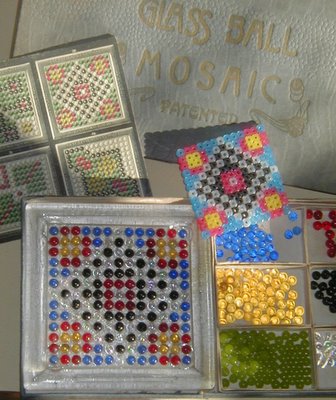
Not blocks, but not far removed from my
Parquetry post of a while back. And maybe we can count that nice chunky block of glass that, with its appropriate indent pattern, forms the base of the design. Or we can claim an Ankerstein link, and reference Richter's
Meteor, which came in several
versions and was shown in various of the
old Anchor plans booklets (scroll down to page 18).
I first learned of my glass set, illustrated above, in the
Kugelmosaik web site I cited for the Richter sets. I had been using Meteor diagrams (such as those in the
Vorlagenheft link for the first set -- and scroll down for an Ankerstein image!) to make fuse bead patterns with
Perler and
Hama beads, and was googling for more variety. That item mid-right is my newest fuse-bead block, made in counterpoint to the design I had just made in glass.
The
Vorlagenheft for the glass set doesn't show blue, so I decided I would substitue blue for green at whim. Since the green is actually a poisionous greenish yellow, whim came early.The white glass balls for the set apparently went missing long ago, with some red and black beads put in the empty compartment. I resubstituted some round pearlized beads of almost the exact size. They all but disappear in the photo, but are quite gaudy in real life.
Not block play in terms of setting blocks one on the other, but certainly not far afield from blocks being arranged esthetically, with the structural elements being repetition and symmetry, rather than stack and span.
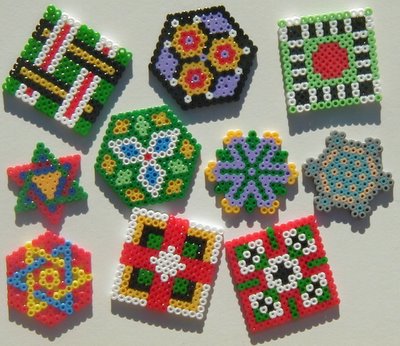
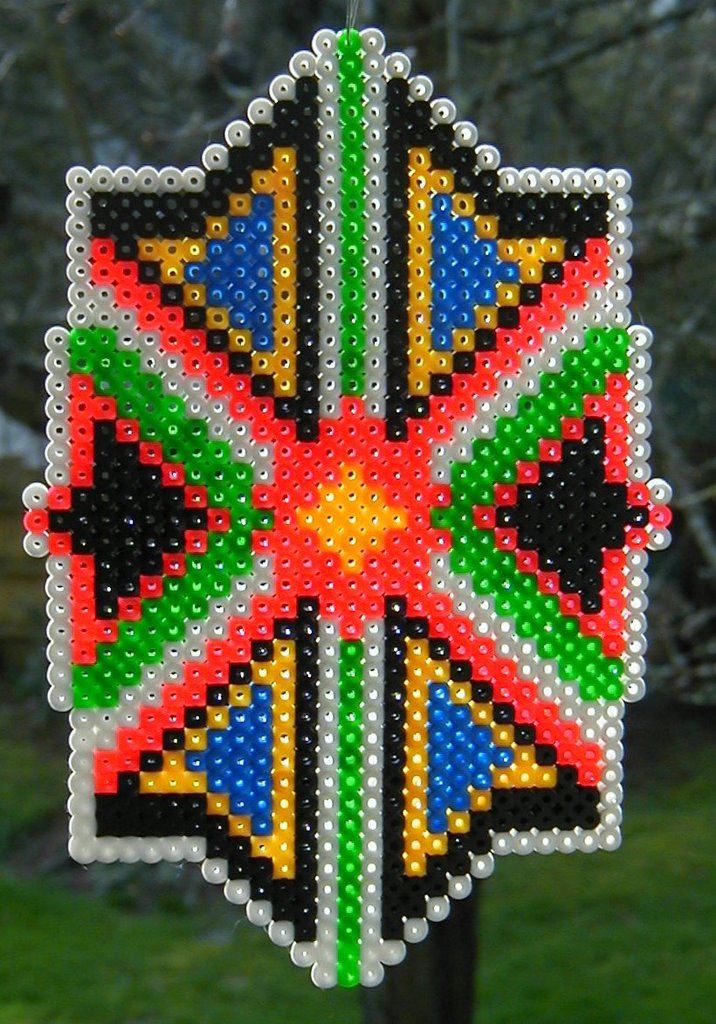
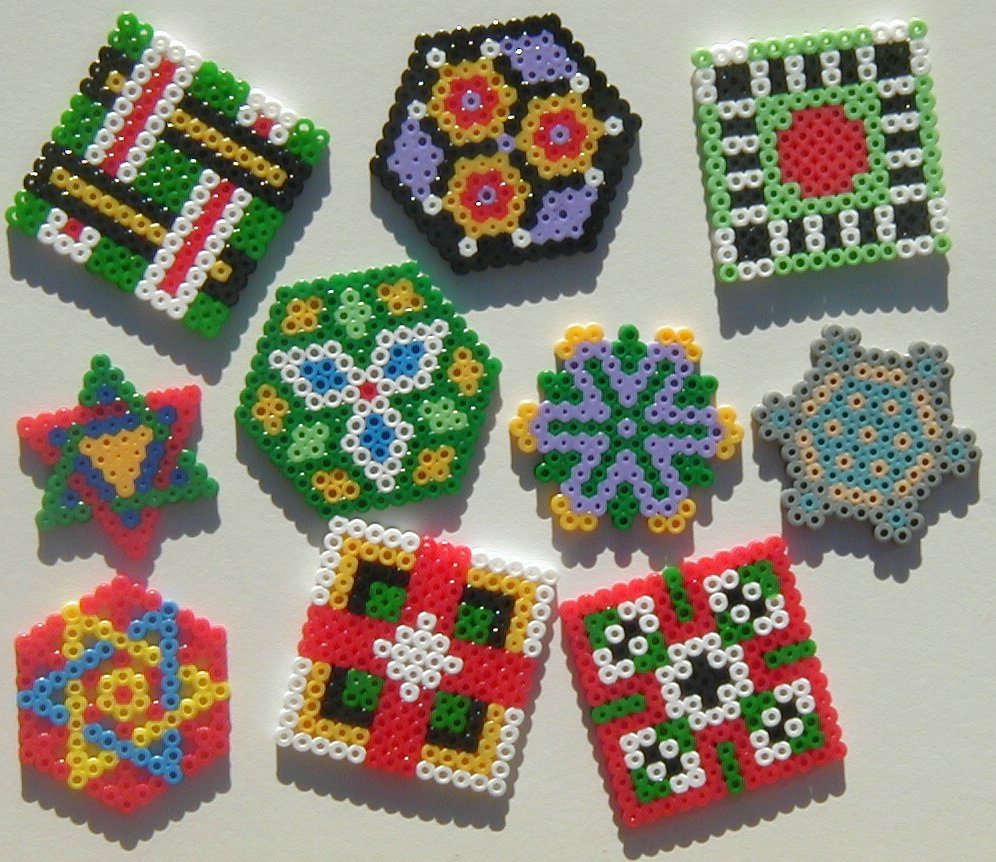
The image below shows some earlier examples of fuse-bead blocks from ball mosaic patterns. For my head at least, a similar overcoming of entropy. A satisfactory extension of block play.
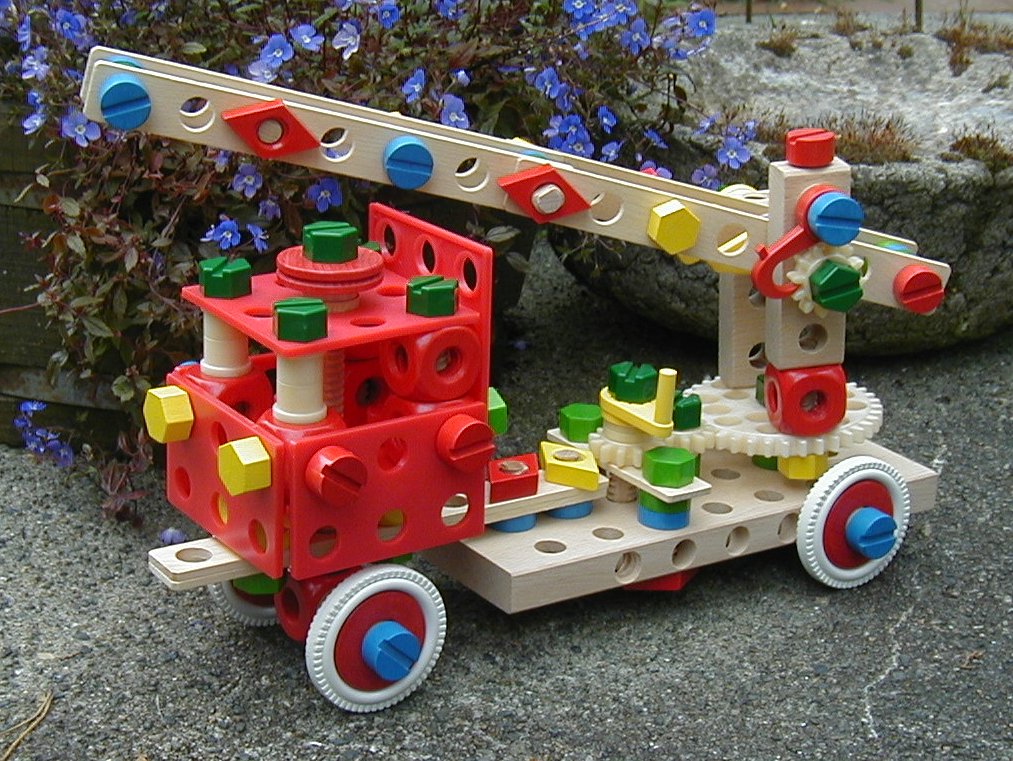 In January I got a Baufix set off eBay: "Unused in original box with all contents..." As is so often the case, the box may have been original, but it was battered, and it wasn't actually complete. Not the bargain it might have been, but still a nice find.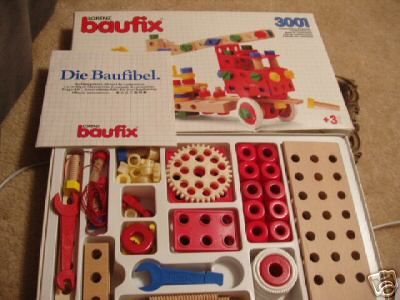


 . Other books have similar designs, but in this one, they are very close to actual size for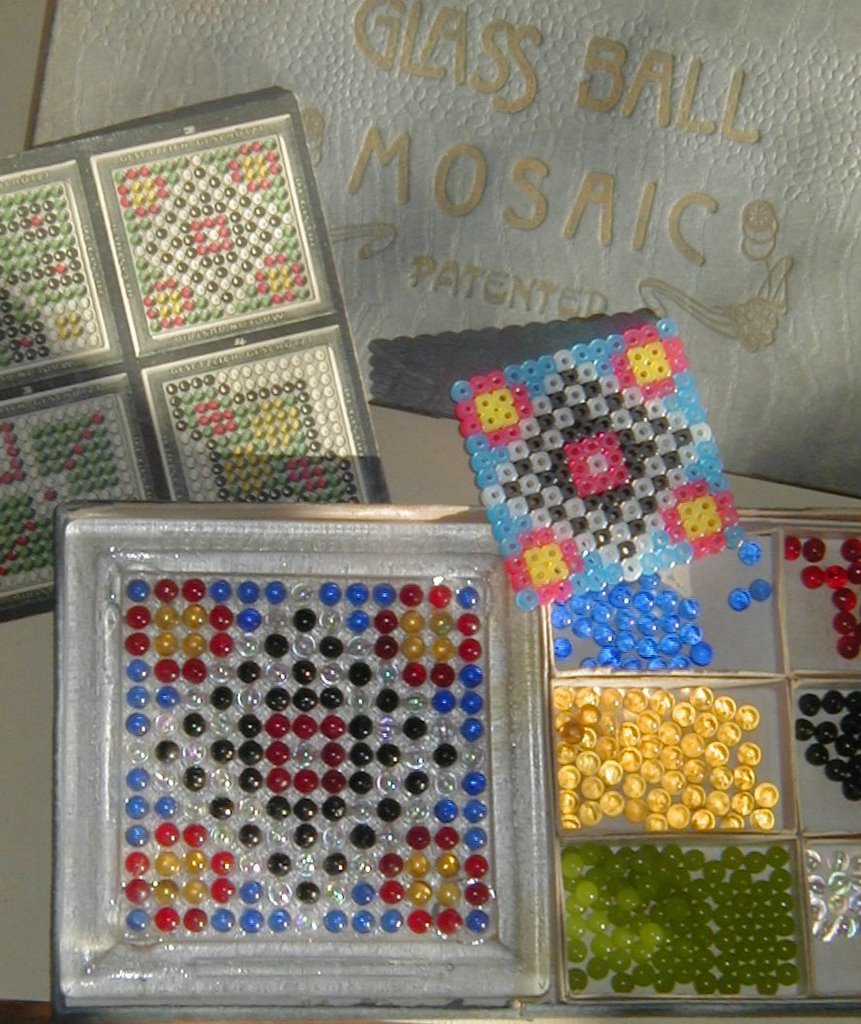

 Posts
Posts


